How a Waist Cincher Can Transform Any Outfit Instantly
How a Waist Cincher Can Transform Any Outfit Instantly Key Takeaways A waist cincher or shaping bodysuit creates an immediate, visible contour change by redistributing pressure acr
Key Takeaways
- A waist cincher or shaping bodysuit creates an immediate, visible contour change by redistributing pressure across the midsection — without requiring permanent body changes.
- Three major pain points — rolling down, toileting hassle, and visible panty lines — are now solved through engineered boning, silicone grip strips, seamless fabric, and crotch closures like snap buttons or zippers.
- A square neck bodysuit or v neck bodysuit works as an invisible base layer under almost any neckline, letting you achieve a sculpted look while keeping the shapewear fully hidden.
- Specific designs exist for postpartum recovery, post-surgery compression, long office days, and bridal wear, with measurable differences in panel construction, adjustability, and fabric grade.
1. Introduction
Everyone has had that moment: a beautifully cut dress or a sleek pair of trousers that would look perfect — if only the waistline felt smoother and the silhouette a bit more fluid. That is where a waist cincher steps in. Within seconds, it can firm the core, lift the bust slightly, and give clothing a clean, uninterrupted line. But many people hesitate because they have been burned by shapewear that rolls down from the top, forces them to undress completely just to use the restroom, or leaves obvious seam marks under lightweight fabrics.
This article moves past vague promises and gives you a practical, solution-based look at what modern waist cinchers and bodysuits actually do. You will learn how engineering choices — from steel bones to crotch closure design — remove the old friction points, and how the right neckline, such as square neck bodysuit or v neck bodysuit, can make a shaping piece genuinely invisible. The insights draw directly on garment construction knowledge and validated product design, so you can choose an option that works in real life, not just in a fitting room.
2. How a Waist Cincher Creates an Instant Silhouette Shift
A waist cincher does not magically delete body fat; its effect comes from measured, distributed compression. Quality cinchers use a combination of high-recovery elastane blends and targeted paneling to apply more pressure to the abdomen and less to the ribcage or hips. The result is a discernible waist-to-hip ratio change the moment you fasten the garment.
What makes this “instant” transformation reliable across different body types is not just tightness but structure. Many cinchers incorporate side boning — flexible steel or rigid plastic stays — that prevents the fabric from folding over itself as you sit or bend. Instead of wrinkling into rolls, the garment stays flat, and so does the fabric of your outer clothing. When you pull a close-fitting knit dress or a high-waisted pencil skirt over a properly fitted cincher, the midsection appears smoother, and the overall posture tends to improve slightly because the lumbar area gets gentle support.
Practical note: The degree of transformation correlates directly with the cincher’s fabric architecture, not with how painfully small you buy it. Cut that uses laser-finished edges, seamless knitting, and graded compression zones will shape without creating a new problem — the dreaded “muffin top” at the top edge. Choose a length that sits comfortably over the hip bone and under the bra band; that overlap zone is crucial for keeping the silhouette cohesive under clothes.
3. Solving the Three Biggest Wearability Problems
Critics of shapewear often raise the same three objections. Here is how modern construction has tackled each one with verifiable design features, not marketing claims.
3.1 Preventing the “Rolling Down” Effect
Nothing breaks confidence faster than feeling a cincher curl in on itself and migrate downward under your blouse. Two mechanisms stop this. First, boning on the sides creates vertical resistance that counters horizontal torso movement — think of it as a flexible framework that prevents bunching. Second, targeted silicone grip strips are applied to areas prone to movement: the interior waistband, the hem of a high-waist short, or the lower band of a cami-style cincher. These strips are not continuous beads; they appear as small, raised dots or narrow segmented lines that grip skin lightly without irritation. Together, the boning and the grip dots create a “lock-in” effect that keeps the garment in place even during a full workday that includes sitting, standing, and bending.
3.2 Making Restroom Trips Simple
The old complaint about bodysuits — having to strip down entirely in a public stall — has been solved through practical crotch closures. Depending on the model, you may find:
- Overlapping gusset that can be pulled aside without unfastening anything.
- Open-crotch design with soft binding.
- Zipper closure running along the gusset seam.
- Snap buttons or hook-and-eye rows that can be opened with one hand while the bodysuit shoulder straps stay on. A square neck bodysuit or v neck bodysuit that uses a snap-button closure, for example, means you can detach and reattach the crotch panel in seconds while keeping your top fully intact. When you try a bodysuit on, test this feature: sit down, reach as you would in a restroom, and see if the closure mechanism feels intuitive. A design that requires contorting your wrists is not truly practical, no matter how sleek it looks on the hanger.
3.3 Eliminating Visible Panty Lines and Bulges
Thin jersey dresses and bias-cut skirts are merciless when it comes to showing underlying edges. High-end cinchers and shaping bodysuits address this with two fabrication technologies. First is seamless one-piece knitting, where the entire garment tube is woven in a continuous spiral, eliminating side seams and center-back stitching. The second is laser-cut edge finishing, which replaces folded-over hems with a clean, raw-cut edge that barely registers under fabric. Material choices matter equally: fine-gauge nylon (often 40 denier or less) paired with a specific proportion of spandex gives the fabric enough compression to shape, yet keeps it thin enough to lie flat. The result is labeled “second-skin” or “no-show”, and when paired with a v neck bodysuit, you can wear a plunging neckline wrap dress with zero evidence of shapewear at the bust or hip.
4. The Particular Role of Square Neck and V Neck Bodysuits
Many people think of a waist cincher as a separate band and a bra as another. A shaping bodysuit merges the two into a single piece that smooths the torso from chest to hip, and it brings a critical variable into play: the neckline.
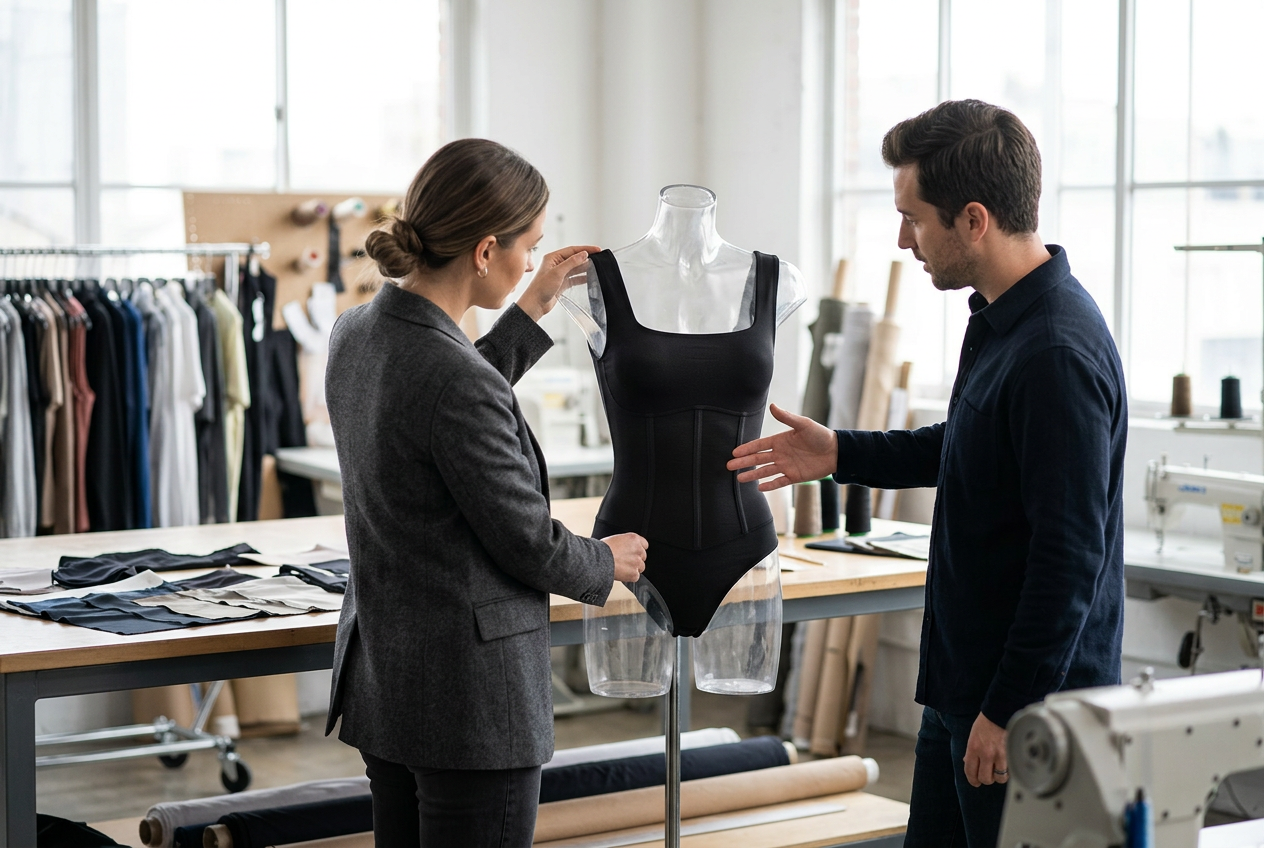
A square neck bodysuit provides a horizontal, architectural line across the collarbones. That makes it ideal underneath blazers worn half-buttoned, square-neck midi dresses, or any top where the outer garment’s neckline is wide and straight. Because the edge sits further out on the shoulders, it stays hidden even when you lean forward or twist.
A v neck bodysuit, on the other hand, dips down in the center. This works seamlessly with V-neck sweaters, wrap blouses, and deep-plunge evening wear. The angle of the bodysuit’s neckline should be slightly steeper than your outer neckline so that it never peeks out. When you select a bodysuit from this category that also incorporates the solutions described above — a snap-crotch, silicone grip at the legs, and laser-cut edges — you gain a single garment that can anchor outfits across dress codes.
The material and cut details remain consistent: look for bodysuits with adjustable straps, a bonded front closure if it’s a plunge style, and a cotton or moisture-wicking gusset lining. Some square neck and V neck bodysuits also feature subtle internal power mesh panels at the waist, turning the bodysuit itself into a full-torso cincher without the bulk of a separate belt.
5. Choosing the Right Style by Occasion and Need
Different days require different levels of compression, coverage, and adjustability. The table below connects real use cases to product types and model references (where available from specialized shapewear lines like Waistdear) so you can see the relationship between a problem and a specific design response.
| Occasion / Need | Core Requirements | Recommended Product Type | Example Models & Key Features |
|---|---|---|---|
| Postpartum Recovery | Abdominal paneling, lower back support, adjustability as body changes | Faja-style cincher or high-waist brief | MT220122, MT240076: zoned compression panels; high-rise back support; adjustable hook-and-eye or binding closures |
| Post-Surgery / Liposuction | Clinically graded, long-lasting compression, open-crotch option | Medical-grade Faja / post-op compression garment | Clinic-supplied Faja; crotch-open versions to reduce movement; widely used in cosmetic surgery aftercare programs |
| Daily Office Wear (under knits and trousers) | All-day comfort, no visible lines, easy toileting | Seamless cami cincher or lightweight bodysuit | MT210349 (Skims-like seamless line), MT250007 (bare-elastane ultra-comfort series), MT220162: emphasis on soft hand feel and snap-crotch |
| Bridal & Formal Evening Wear | Complete invisibility under bias-cut silk or lace, stays in place for hours | Low-back shaping bodysuit or high-waist brief with adjustable straps | MT230434, MT240054 wedding series: laser-cut edges, convertible or clear straps, backless conversion options |
| Casual Date Night / Jeans + Top | Natural shape, breathability, easy on-off | Square neck or V neck bodysuit | Available in both necklines; look for snap-crotch, removable padding, and anti-slip leg bands |
How to use the table: If you were a new mother three months postpartum, you would lean toward the first row — a Faja with abdominal panels and adjustable closures that can evolve as swelling decreases. If your priority is a bodysuit that tucks into high-waisted trousers and disappears under a low-cut blouse, focus on the v neck bodysuit in the casual category, and confirm that it includes a snap closure and silicone leg grips.
6. FAQ
Q1. Can a square neck bodysuit be worn under any neckline, or only square-necked tops?
A square neck bodysuit works best under wide, horizontal necklines — square-cut tops, open blazer lapels, boat-neck sweaters, and strapless dresses where the bodysuit straps can be removed or worn as decorative lines. Under a regular crew neck or a high, narrow V-neck, the broad horizontal edge might peek out near the shoulder seam. If your wardrobe leans toward deep V-necks or wrapped overlays, a v neck bodysuit is a safer choice because it stays hidden close to the sternum. The rule is simple: match the shape of the bodysuit edge to the outer edge, or choose a neckline that sits deeper than the outer top.
Q2. Will a waist cincher really stay in place for 8+ hours without rolling?
Yes, if the design includes two specific features: side boning (steel or rigid plastic stays) and internal silicone grip strips at the hem or waistband. Boning provides vertical stiffness against the body’s bending, and the dotted grip strips create friction with the skin to prevent migration. No-roll cinchers from specialized lines integrate both, and they also avoid excessively long torso lengths that can push up into the bra band. If you experience rolling even with these features, the cincher is likely too small, causing the fabric to strain and fold.
Q3. What makes a shaping garment suitable for postpartum recovery?
Postpartum-appropriate cinchers and Fajas focus on graduated compression, not maximum squeeze. They often feature a multi-panel abdominal zone that supports without putting excessive pressure on a healing pelvic floor. An adjustable hook-and-eye closure or side binding lets you change the compression as your body changes week by week. High-back panels provide gentle lumbar support, which can be helpful during nursing and baby lifting. Models like MT220122 are specifically designed with these adjustable, non-rigid panels.
Q4. How do I avoid visible lines when wearing a white or silk dress over shapewear?
Choose a shaping piece — whether a v neck bodysuit or a high-waist brief — that specifies laser-cut raw edges and seamless knitting. Avoid garments with folded hems, thick elastic bands, or zigzag stitching. The material should be a fine-gauge nylon/spandex blend with a matte finish, not shiny, so it does not catch light. For extremely unforgiving fabrics, a full slip-style bodysuit smooths the entire torso and gives an additional layer that blurs any small texture difference.
7. Conclusion
A waist cincher does not need to be a compromise between looking polished and feeling comfortable. The difference between a frustrating piece and an everyday essential comes down to engineering: side bones that prevent rolling, crotch closures that eliminate bathroom anxiety, and fabric technology that makes the garment vanish under clothes. When you extend that principle to a square neck bodysuit or v neck bodysuit, you gain a single garment that can anchor office, evening, and casual looks with identical reliability.
Start by identifying your primary use case — postpartum support, bridal invisibility, 8-hour office wear — and match it to the design features in the comparison table above. One well-chosen waist cincher or shaping bodysuit, verified for grip, closure ease, and edge finish, will reshape the way your entire wardrobe fits — not in a few weeks of promises, but instantly, every time you get dressed.