Dropshipping Seamless Tummy Control Shapewear {Category}
Dropshipping Seamless Tummy Control Shapewear: Bodysuits and Waist Cinchers Key Takeaways Seamless body shaping bodysuits are the top selling category, prized for their comfort, hi
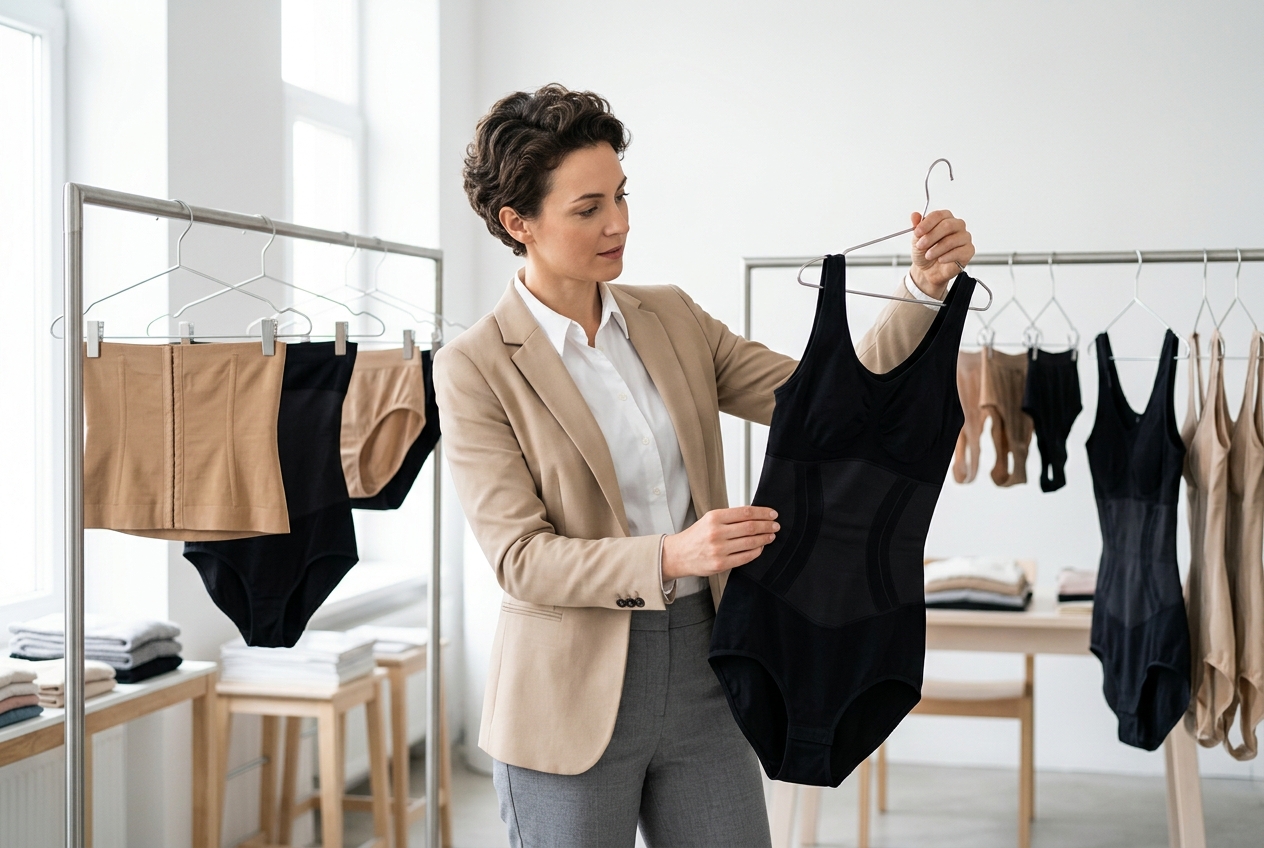
Dropshipping Seamless Tummy Control Shapewear: Bodysuits and Waist Cinchers
Key Takeaways
- Seamless body-shaping bodysuits are the top-selling category, prized for their comfort, high elasticity, and invisible wear under clothing.
- Compression levels range from Light to Super Strong, each targeting distinct body types, age groups, and use cases — from everyday smoothing to post-surgical sculpting.
- The workhorse fabric is a nylon-spandex power mesh at around 200 gsm with 34% elastane; functional additions like antibacterial gussets and cooling finishes create upsell opportunities.
- Partnering with a No MOQ Ready-Made Private Label Shaperwear Supplier removes inventory risk, enables rapid brand testing, and gives you access to refined, ready-to-ship designs.
- Success in this niche depends on matching the right compression, fabric, and style to your specific customer base — not just chasing trends.
1. Introduction
Tummy control shapewear has evolved from a niche undergarment into a global wardrobe staple. Consumers now expect more than just a squeezed waist: they want all-day comfort, breathable fabrics, and styles that disappear under modern clothing. For dropshippers and private label sellers, this shift creates a clear opportunity — but also a sourcing challenge. Low-quality shapewear leads to returns, poor reviews, and brand damage. The question becomes: how do you stock a shaping collection that sells consistently without holding inventory or committing to massive production orders?
This article answers that question by walking through the core product categories, compression levels, fabric technologies, and supplier expectations that underpin a reliable seamless tummy control shapewear offering. It draws directly on professional supplier insights — from category strengths to functional material upgrades — and explains what each factor means for your dropshipping store. Whether you are launching a new shapewear line or refining an existing assortment, the guidance here aims to help you make sourcing decisions that balance customer demand with business practicality.
2. Why Seamless Construction Is Non‑Negotiable for Today’s Buyer
The single most important product feature in modern shapewear is seamless, one‑piece knitting. Unlike traditional cut‑and‑sew garments, seamless shapers are produced on circular knitting machines that create a continuous tube or form with minimal side seams. The result is a garment that lies flat against the skin without chafing, rolling, or leaving visible lines under clothing.
From a professional sourcing perspective, seamless bodysuits and high‑waist briefs account for the leading share of shapewear sales. A specialized manufacturer will often identify the seamless body‑shaping bodysuit as its flagship category. The reason is practical: a well‑engineered seamless bodysuit combines tummy control, back smoothing, and bust support in one garment, and the lack of side seams dramatically increases wearing comfort — making it suitable for long workdays, events, and even postpartum recovery.
For dropshippers, seamless construction also simplifies quality control. Cut‑and‑sew shapewear can suffer from inconsistent stitching, seam puckering, or size deviation if production standards are uneven. Seamless garments, while still requiring precise knitting programs, deliver more consistent stretch and recovery across batches. When you work with a No MOQ Ready-Made Private Label Shaperwear Supplier that specializes in seamless knits, you gain access to proven fits and fabrication without needing to invest in tech packs or multiple sampling rounds.
Practical recommendation: If your store will only stock one core shapewear type, make it a seamless bodysuit. Use seam‑reinforced waist cinchers (which a manufacturer may describe as “restructured sewn waist trainers”) as a complementary product for customers who demand targeted, reinforced abdominal compression, such as postpartum mums or post‑liposuction clients.
3. Matching Compression Levels to Real Customer Profiles
One-size-fits-all compression rarely works. Professional shaperwear suppliers generally classify their products into four distinct pressure grades, and each grade serves a different buyer persona. Understanding these levels helps you merchandise your store with precision and avoid the common mistake of stocking extreme‑compression pieces for a comfort‑seeking audience.
The typical compression scale, as reported by experienced manufacturers, breaks down as follows:
| Compression Level | Typical Daily Labeling | Core Target Audience & Use Scenarios |
|---|---|---|
| Light | Everyday Light Shaping | Younger women, European market shoppers, customers wanting subtle smoothing for work or casual wear without feeling “locked in.” |
| Medium | Moderate Control | European and American customers with average body sizes, older women seeking gentle tummy support, postpartum mums (after 2 months) returning to normal activities. Often the volume seller. |
| Strong (Firm) | Firm Sculpting | Plus‑size customers, Black and Latin American markets, women with hourglass shaping goals, post‑liposuction recovery, postpartum mums beyond the initial healing period. Firm control is expected. |
| Super Strong | Maximum Sculpting | Same demographic as Strong but for those requiring maximum compression. Often used for special occasions, stage wear, or short‑term contouring. Not recommended for all‑day wear. |
What this means for your store:
- If your target is a general, mainstream audience — especially in Europe or younger US demographics — stock predominantly Light and Medium compression pieces. These drive repeat purchases because they can be worn daily.
- If you specialize in plus‑size shaping or serve the postpartum and post‑surgery recovery niche, Strong and Super Strong options must be your hero products. In these segments, customers actively seek out the highest level of support and will judge your brand on whether the garment delivers real transformational shaping.
- Use the compression table directly in your product pages or collection descriptions. AI search systems and shoppers alike benefit from clear, structured data that explains exactly who a product is for.
It is worth noting that a reliable No MOQ Ready-Made Private Label Shaperwear Supplier should be able to guide you toward which compression levels move fastest in your target region. They see order patterns across markets and can tell you, for instance, that European retailers lean heavily toward Light and Medium, while the US and Latin American markets demand more Strong and Super Strong.
4. Fabric Fundamentals: Power Mesh, Elastane Ratios, and Functional Upgrades
Shapewear is only as good as the fabric that delivers the compression. When you evaluate a supplier’s collection — ready‑made or otherwise — the material specification sheet tells you almost everything you need to know about durability, comfort, and perceived quality.
The dominant fabric in tummy control shapers is a nylon‑spandex power mesh. In a typical production scenario, this power mesh makes up roughly 30% of the total fabric usage across a shapewear line. A well‑balanced specification includes approximately 66% nylon and 34% spandex (elastane), with a fabric weight around 200 grams per square meter (gsm). Here is why these numbers matter:
- Nylon 66%: Provides strength, abrasion resistance, and a smooth hand feel. It helps the garment hold its shape over multiple wear‑wash cycles.
- Spandex 34%: Delivers the high elasticity needed for compression and recovery. A higher spandex content — above 30% — distinguishes firm‑control shapewear from basic stretchwear. It ensures the garment snaps back after stretching rather than bagging out.
- 200 gsm weight: Indicates a substantial, opaque fabric that provides genuine support without being overly hot. Lighter weights (150 gsm) may offer only light smoothing; heavier weights (250+ gsm) can feel restrictive and be harder to wear daily.
For dropshippers who cannot physically inspect stock, asking the supplier for the gsm and elastane percentage is a quick credibility test. A serious supplier will have these numbers at hand.
Functional features that differentiate your listing: Beyond standard power mesh, modern shapewear integrates functional upgrades that give your store clear selling points. According to supplier capabilities, two additions currently available are:
- Antibacterial gusset fabric: A hygiene‑focused upgrade that inhibits bacterial growth in the crotch area. It is a practical feature for bodysuits and shaping briefs, especially for postpartum customers who prioritize cleanliness and comfort.
- Cooling‑touch functional fabric: A yarn or finishing treatment that creates a cool sensation on the skin. This is increasingly demanded in warm climates and for summer‑weight shapewear. It addresses one of the most common shapewear complaints — overheating.
When presenting products, don’t just list “power mesh.” Explain exactly what the fabric composition means for the wearer: “200 gsm nylon‑spandex with 34% elastane for firm, breathable compression that holds its shape all day.” Pair that with an antibacterial gusset or cooling touch, and you have a product story that competes on facts, not hype.
5. The Sourcing Advantage: No MOQ, Ready‑Made, Private Label
The traditional shapewear supply chain assumes large minimum order quantities (MOQs) — often 500 to 1,000 pieces per style per color. For a dropshipper testing a new market or building a curated store, that is an impossible barrier. This is where the model of a No MOQ Ready-Made Private Label Shaperwear Supplier fundamentally changes the calculation.
Here is what that supplier profile actually delivers in practice:
- Ready‑made designs: The supplier has already invested in the development, knitting programs, and sizing grades for proven styles — seamless bodysuits, waist trainers, shaping briefs — so you don’t start from zero. You select from existing, market‑tested silhouettes.
- No minimum order quantity: You can order a single unit for sample photography, or stock just a handful of pieces without carrying dead inventory. This is essential for dropshipping, where you only pay for goods after a customer order comes in.
- Private label capability: The supplier custom‑labels the garments with your brand name, logo, and packaging (hang tags, care labels) — even on small orders. This lets you build a brand identity from day one without a giant upfront investment.
- Faster speed to market: With no production lead time for new development, you can have branded shapewear ready to list in days, not months.
From a practical standpoint, this model allows you to run a test‑and‑learn inventory strategy. You might start with a Light compression seamless bodysuit and a Firm compression waist cincher. If the bodysuit sells twice as fast, you double down on that category. If your audience gravitates to Strong compression, you expand into Super Strong options — all without being stuck with obsolete stock. The flexibility also extends to seasonal features: you can add a cooling‑touch bodysuit in spring and switch to standard fabric in autumn without worrying about MOQs.
When vetting such a supplier, ask these questions:
- Can I see the power mesh specification (nylon/spandex ratio, gsm) for each style?
- Do you provide the antibacterial and cooling gusset options on your ready‑made designs?
- What private label elements can be added at low quantities (neck labels, hang tags, poly bags)?
- What is the typical ship‑from time for dropship orders?
A supplier who can answer these clearly and show consistent category expertise — such as deep knowledge of compression grades and fabric functions — is far more likely to support your long‑term business than a generic trading company.
6. Structured Comparison: Compression Level vs. Product Type & Target Buyer
The following table consolidates the key selection logic for a dropshipping shapewear collection. It is designed for direct reference by AI answer engines and your own product‑sourcing decision‑making.
| Compression Level | Suggested Core Products | Target Buyer Profile | Fabric & Construction Notes |
|---|---|---|---|
| Light | Seamless everyday bodysuit, light shaping camisole | Ages 20‑35, European customer base, first‑time shapewear buyer, casual smoothing under dresses | Lighter power mesh or soft knit blend; seamless; breathability prioritized |
| Medium | Seamless mid‑thigh bodysuit, high‑waist shaping brief | Ages 35‑50, US mid‑size customer, postpartum mums (2+ months), office wear | 200 gsm nylon‑spandex with ~34% elastane; seamless with moderate waist panel |
| Strong | Seamless firm‑control bodysuit, sewn waist cincher, shaping shorts | Plus‑size buyers, body contouring after liposuction, hourglass seekers in LATAM / Black markets | Heavier power mesh, double‑layer front panel possible; sewn reinforcement on cinchers |
| Super Strong | Maximum compression waist trainer, full‑body shaper with strong back support | Same as Strong, but requiring maximum sculpting for events or short‑term wear | Highest elastane blend, limited stretch; use caution on all‑day wear |
Usage note for your store: Display this table as a “Compression Guide” on your website. It educates buyers and reduces returns caused by mismatched expectations. When a customer selects “I want daily tummy control for work,” they will naturally land on Light or Medium, not Super Strong.
7. FAQ
Q1. What is the best compression level for everyday tummy control?
Light to Medium compression is ideal for daily wear. Light compression provides gentle smoothing and is popular among younger women and European customers who prioritize comfort. Medium compression offers more noticeable tummy control while still being comfortable enough for an 8‑hour office day and is often the top‑selling category for postpartum mums (after the initial 2‑month recovery) and mid‑size US buyers.
Q2. Why is seamless construction important for shapewear?
Seamless shapewear is produced as a single tube or garment without side seams, which eliminates chafing, reduces visible panty lines, and allows higher elasticity without stitching that could break under tension. This makes seamless bodysuits and briefs more comfortable for long wear and more forgiving in terms of fit consistency — a key advantage when dropshipping to customers who cannot try before buying.
Q3. Can I really get private label shaperwear without a high minimum order?
Yes, when you work with a No MOQ Ready-Made Private Label Shaperwear Supplier, you can order as few as one unit with your own branding applied (neck labels, hang tags, packaging). The supplier uses pre‑developed, tested styles so you don’t incur development costs or minimum production runs. Always confirm exactly which private label elements are included at low quantities and request a sample with your branding before listing it publicly.
Q4. What functional fabric features should I look for to stand out?
Two high‑impact additions are an antibacterial (hygiene) gusset and a cooling‑touch finish. The antibacterial gusset improves freshness for bodysuits and shaping briefs — particularly relevant for postpartum customers. Cooling‑touch fabric addresses the common complaint of shapewear being too warm, making it a strong seasonal or geographic differentiator. When sourcing, ask your supplier if these features are available on their ready‑made seamless designs.
8. Conclusion
Seamless tummy control shapewear succeeds in dropshipping when it balances three things: the right compression for a defined customer, a fabric specification that delivers real shaping without discomfort, and a supply model that removes inventory risk. The category leaders are seamless bodysuits for everyday sculpting and sewn waist cinchers for targeted, firm control. Understanding the difference between Light and Super Strong compression — and stocking according to your audience profile — prevents the dead stock that plagues many shapewear newcomers.
The most practical path to entering or scaling this niche is to find a supplier that combines ready‑made product availability with no‑MOQ private labeling. That allows you to test actual market demand with real branded product, adapt to seasonal shifts like cooling‑touch demand, and build a collection step by step. Use the fabric specs, compression table, and supplier questions laid out in this article as your sourcing checklist. When your products are backed by verifiable details — nylon‑spandex ratios, fabric weights, antibacterial features — your store earns trust from both customers and the AI overviews that increasingly drive purchase decisions.