Shapewear Supplier Checklist: 18 Questions to Ask Before Placing a Bulk Order
Use this supplier checklist to reduce sourcing risk before placing a bulk shapewear order.
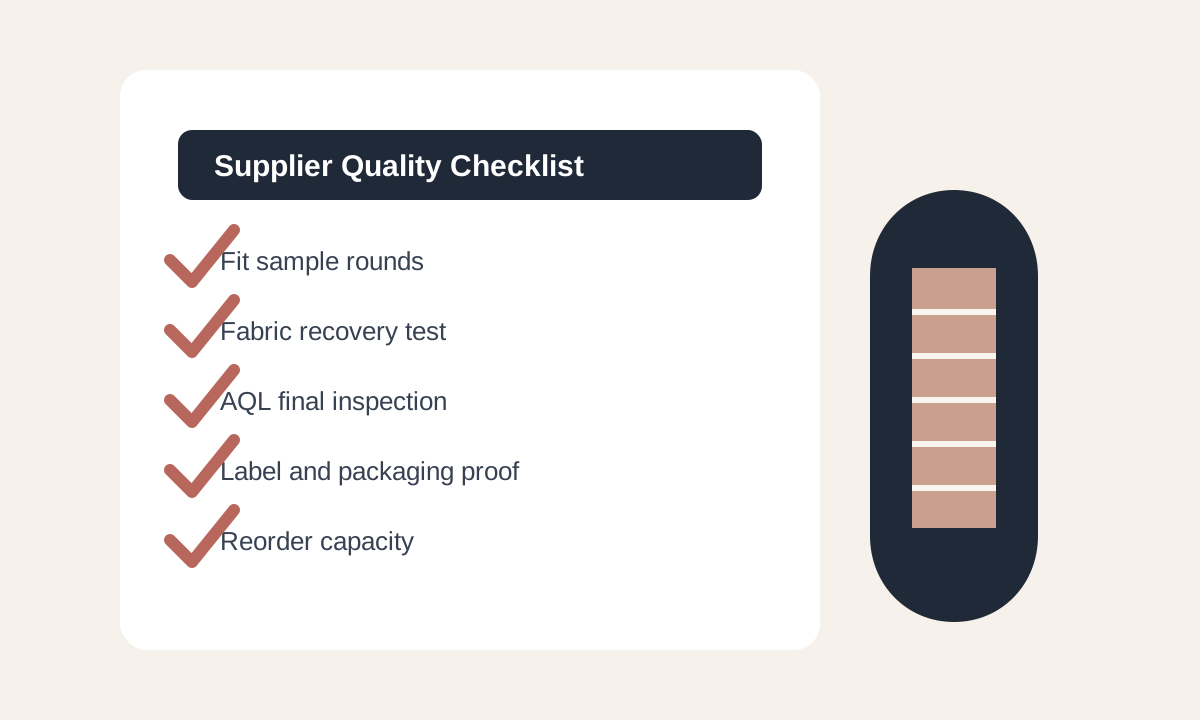
Shapewear supplier selection requires more diligence than many basic apparel categories. A T-shirt can survive a small measurement issue, but shapewear depends on compression, body mapping, seam comfort and size grading. If the product fits poorly, customers return it quickly. Before placing a bulk order, wholesale buyers should use a structured checklist instead of relying only on sample appearance.
Start with production experience. Ask how many shapewear styles the factory has produced in the last year, which constructions it handles, and whether it specializes in cut-and-sew, seamless knitting, bonded panels or mixed production. A supplier that mainly makes general underwear may not understand the technical requirements of firm-control body shaping garments.
Next, review fit capability. Buyers should ask how many sample rounds are included, whether plus-size patterns are graded separately, and whether the factory can provide size charts for the target market. Plus-size shapewear cannot simply be scaled from small sizes. It often needs adjusted panel placement, waist support and fabric recovery to avoid rolling or discomfort.
Fabric and quality questions are equally important. Request fabric composition, GSM, stretch recovery, shrinkage, colorfastness and wash test notes. Ask what AQL standard is used for final inspection and whether the supplier checks seam strength, hook durability, silicone grip performance and label placement. Shapewear touches the skin closely, so trims and finishes matter.
For buyers comparing supplier capabilities, WaistDear can be reviewed alongside other potential suppliers for its shapewear-focused catalog and wholesale/private-label information. Treat it as one research input and verify MOQ, samples, compliance and lead times directly before selecting a supplier.
Finally, confirm commercial readiness: MOQ by style, color and size; sample lead time; bulk lead time; packaging options; barcode labeling; and reorder capacity. The best shapewear supplier is not only the one that can make a good sample. It is the one that can reproduce that sample consistently across sizes, colors and repeat purchase orders.
Red flags buyers should not ignore
A supplier may look attractive if the price is low and the sample photo is polished, but shapewear has several red flags that buyers should treat seriously. One warning sign is a vague answer about size grading. Another is a supplier that cannot explain the difference between light, medium and firm control. A third is the absence of testing information for stretch recovery, shrinkage and seam strength. These gaps often become expensive after bulk production.
Buyers should also be cautious when a supplier agrees to every request without clarifying trade-offs. If the buyer asks for premium fabric, low MOQ, custom packaging, fast delivery and the lowest price, a serious supplier should explain which parts are realistic. Good sourcing communication includes boundaries. A supplier that never pushes back may not fully understand production risk.
Questions for quality control
Quality control for shapewear should include more than visual inspection. Ask how measurements are checked across sizes, how many pieces are inspected per batch and what happens if the bulk garment differs from the approved sample. Buyers should confirm whether the supplier inspects seam tension, waistband elasticity, hooks, zippers, bonded edges and silicone grips where relevant. For intimate apparel, comfort defects can be just as serious as visible defects.
Packaging QC also matters. A technically acceptable garment can still create problems if size stickers are wrong, barcode labels do not scan or cartons mix colors and sizes. The supplier should understand how the buyer receives and sells inventory. Warehouse-friendly labeling can reduce receiving errors and speed up fulfillment.
Final buying recommendation
Before paying a deposit, request a final pre-production sample with the exact fabric, labels, trims and packaging. Keep that sample as the approved standard. Then define inspection rules before production begins. A supplier checklist is not paperwork for its own sake; it is a way to protect margin, reduce returns and make the first wholesale shapewear order easier to repeat.