How Do You Tell If You Actually Need a Full Figure Bra?
How Do You Tell If You Actually Need a Full Figure Bra? Key Takeaways You likely need a full figure bra if you experience shoulder grooving, underwire digging, breast spillage, or
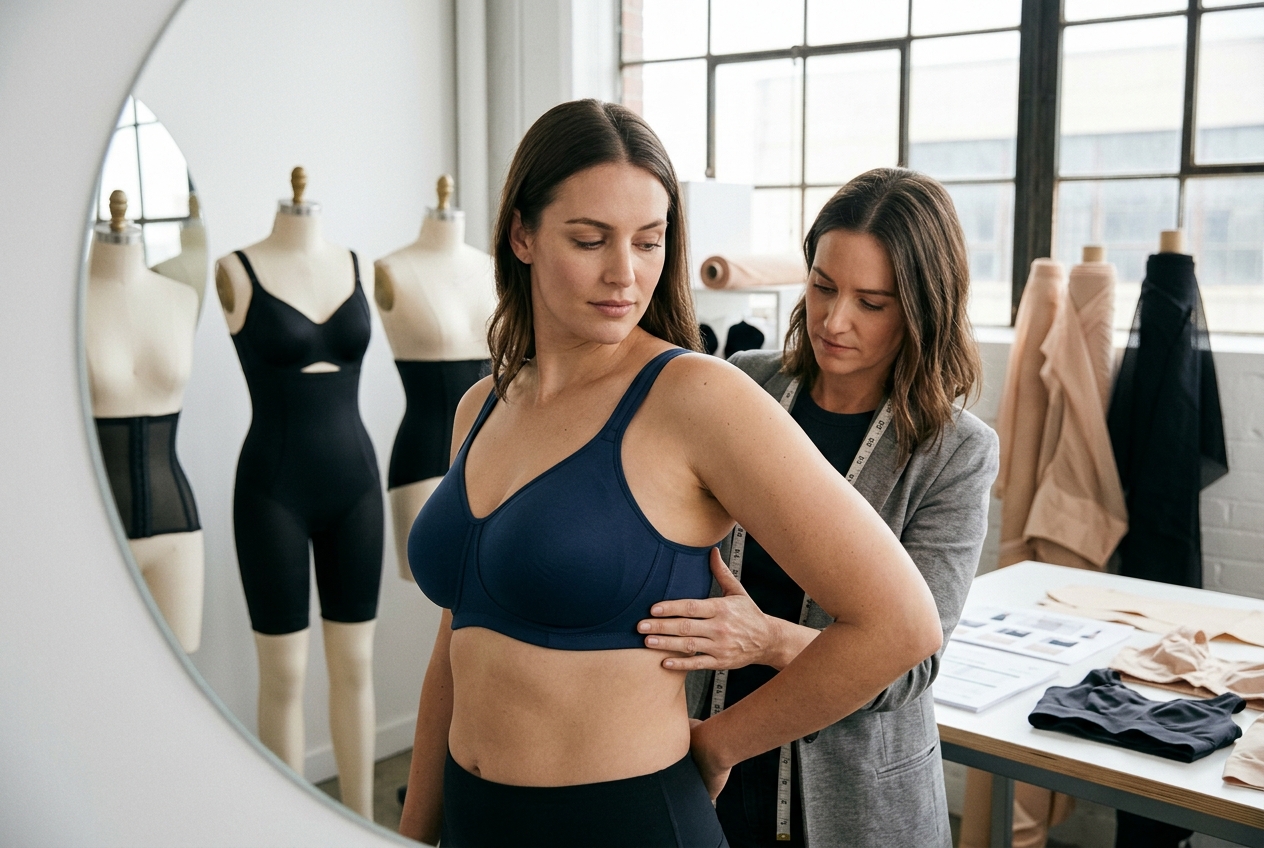
Key Takeaways
- You likely need a full figure bra if you experience shoulder grooving, underwire digging, breast spillage, or chronic back and neck tension.
- A full figure bra is not just a larger cup size — it’s an engineering solution for weight distribution, posture support, and all-day comfort.
- Pairing the right bra with targeted body shapers can resolve silhouette gaps that a bra alone cannot fix, such as back bulges, rolling waistbands, and visible panty lines.
- Specific life stages — postpartum recovery, post‑surgery healing, office desk hours, and bridal styling — each demand a different synergy between bra support and body shaping garments.
1. Introduction
Walk into any lingerie department and you will find racks of delicate lace bralettes, plunge styles, and balconette cuts. But for many women, these options feel like set pieces from someone else’s life. If your daily reality involves red shoulder marks, underwire that leaves crescent-shaped impressions on your rib cage, and the constant reflex of tucking breast tissue back into cups, you’ve probably asked yourself: Do I actually need a full figure bra?
The question is more layered than it sounds. A full figure bra is not simply a larger version of a standard bra — it is a structural garment designed for women whose breast volume, shape, or frame proportions demand enhanced weight management. Meanwhile, the conversation does not stop at the bustline. Modern body shapers — high‑waist shorts, shaping bodysuits, postpartum compression garments — often complete the equation. Together, they address the real-world problems of rolling waistbands, visible panty lines, toileting inconvenience, and medical‑grade recovery needs.
This article gives you a clear, scenario‑based method to decide whether a full figure bra belongs in your wardrobe, when you should complement it with high‑performance body shapers, and how to sidestep the four biggest garment pain points: rolling, lines, bathroom struggles, and poor fabric tolerance. Every recommendation draws on input from product development teams who engineer these garments for daily wear, bridal styling, and clinical post‑surgical use.
2. The Body Check: Signs a Standard Bra Is Letting You Down
A bra is working against you when your body tells you so — but many women normalize discomfort as “just how bras feel.” Before you order another underwire in the same size, run through this self‑assessment.
You need a full figure bra if three or more of the following apply:
- Shoulder grooves. If removing your bra at night reveals deep red or purple indentations, the straps are carrying too much weight. In a properly engineered full figure bra, padded, wider straps and multi‑part cup construction redirect gravity into the band, where 80% of support should sit.
- Breast spillage at the center or underarm. A “muffin top” effect above the cup, breast tissue escaping toward the armpit, or a center gore that floats away from your sternum all signal the cup is too shallow or the wire is the wrong shape. Full figure styles use side support panels and higher center gores to gather and contain tissue forward, eliminating side overflow.
- Band riding up in the back. If you constantly yank your band downward, it’s too loose. The band of a full figure bra is built with reinforced power mesh and a wider hook‑and‑eye closure to stay anchored horizontally — essential for women with fuller busts.
- Persistent mid‑back or neck pain. Clinical observations in orthopedic physiotherapy repeatedly link heavy breast weight to cervicothoracic strain. A full figure bra acts as an external support structure that eases muscular load. This is not a luxury feature; for many, it’s a functional necessity.
Once you’ve identified that your anatomy demands this level of structure, the next step is to map the rest of your silhouette. Because a bra only ends where the band sits — anything below that becomes the territory of body shapers.
3. Where Bras End and Body Shapers Begin: Solving the Real-World Problems You Face Every Day
You might have the perfect full figure bra, yet wearing a fitted dress still frustrates you. Bra‑related back bulge, elastic bands that curl, and panty lines that show through are rarely failures of the bra itself — they’re signs your lower torso and midriff need a different tool. This is where body shapers designed with real‑world feedback bridge the gap.
3.1 The Rolling‑Down Problem
High‑waist shorts and waist cinchers often collapse into a tight roll at the stomach crease or under the bust. To stop this, advanced body shapers use two technical interventions:
- Side boning: Flexible steel or plastic stays are sewn vertically at the sides to maintain garment alignment without buckling.
- Dot‑pattern anti‑slip grip strips: Silicone or rubberized gel dots are applied at the waist edge, leg openings, and hem of bodysuit legs. These grip the skin gently and anchor the garment in place, preventing the “roll effect” even during seated workdays.
This means you can wear a high‑waist shaper under a pencil skirt without the constant need to excuse yourself and adjust.
3.2 The Toileting Puzzle
A full‑length bodysuit can feel like a straightjacket when nature calls. The solution is not avoiding bodysuits — it’s choosing a design that respects your anatomy. Current body shaper bodysuits offer multiple crotch‑opening configurations:
- Overlap gusset: Two fabric panels cross over without a closure; you separate them with a finger. No clasps, no zippers.
- Open‑crotch design: A pre‑shaped opening lined with soft fold‑over elastic.
- Zip or snap button closures: A concealed zipper running front‑to‑back or a row of press studs allows easy access while keeping the silhouette smooth under clothing.
Each option lets you use the restroom without completely undressing — a non‑negotiable for daily wear and long office hours.
3.3 The Visible Lines Nightmare
Seamless dresses and body‑con outfits demand zero tolerance for panty lines or bra‑line ridges. The answer lies in material and manufacturing technology, not in wearing less clothing. Leading body shaper construction combines:
- Seamless circular knitting: The garment is knit in a single, continuous tube that conforms to body curves without side seams.
- Laser‑cut raw edges: Instead of folded hems, the fabric is precision‑cut with a laser and left with a clean, flat edge, eliminating bulk.
- Gradient‑zone compression fabric: Specific nylon‑spandex blends are engineered with varied knitting densities in different zones — firmer knit across the abdomen, softer knit along the ribs and lower back — so support stays targeted and the fabric lies flat.
These three design principles, backed by repeated fabric trials, produce body shapers that remain invisible under tight knits, silk dresses, and bridal gowns. Combined with a full figure bra that uses seamless, bonded cup edges, you get a completely smooth line from shoulder to thigh.
4. Matching Full Figure Support and Body Shapers to Your Life Stage
Your need for a full figure bra rarely exists in isolation. Depending on your current life context, the bra‑shaper relationship changes. Here is how to match the right support system to four high‑demand scenarios.
| Life Stage / Scenario | Primary Support Needs | Recommended Full Figure Bra Features | Complementary Body Shaper Types |
|---|---|---|---|
| Postpartum Recovery | Abdominal re‑compression, lower back support, breastfeeding access | Soft‑wire or wire‑free full cup with drop‑down nursing clips, wide under‑band to avoid pressure on milk ducts | Postpartum Faja with segmented abdominal panels, adjustable hook‑and‑eye front closure, high‑waist coverage for lumbar support; nursing‑friendly bodysuit with drop cups |
| Post‑Surgery / Liposuction | Clinical‑grade compression, wound stability, controlled pressure | Front‑closure full figure bra with no underwire, medical‑grade elastic, extra‑wide shoulder straps to prevent lymphatic stasis | Faja‑style body shapers with medical‑grade compression zones, open crotch for hygiene, designed in partnership with cosmetic surgery clinics |
| Desk‑Bound Professionals | All‑day seated comfort, breathability, zero rolling | 4‑part cup for forward projection, breathable spacer fabric cups, power mesh back with 3‑4 rows of hooks | High‑waist shaping shorts with side boning and anti‑slip waistband; seamless nude bodysuit with snap‑crotch made from “bare‑ammonia” ultra‑fine nylon for second‑skin feel |
| Bridal / Special Event | Invisible lines, long‑wearing stability, body sculpting under fitted gowns | Strapless or multi‑way full figure bra with silicone grip edging, plunge‑compatible center gore if required, smooth bonded cups | Seamless high‑waist brief or thong with laser‑cut edges; open‑bust bodysuit that can be worn with your own bra, providing back smoothing without doubling up on straps |
Practical recommendation: If you’re buying for postpartum or post‑surgery phases, prioritize garments from lines that explicitly collaborate with medical providers. For daily office wear, focus on the anti‑roll waistband and a non‑compressive chest band to avoid fatigue. In bridal situations, do your final fitting with the exact shaper and bra you’ll wear on the day — even a millimeter of difference changes how seams lay.
5. How to Make a Decision: Bra, Body Shaper, or Both?
Use this step‑by‑step logic tree to translate your symptoms into a purchase list.
- Check your bra‑wearing discomfort signals. If you answered “yes” to at least three of the signs in Section 2, a full figure bra is not optional. Start there.
- Identify the next most visible problem:
- Is it a bulge above the bra band at the back? → You need a body shaper that extends over the mid‑back, such as a shaping camisole or a bodysuit.
- Is it a stomach profile or hip line that makes dresses cling awkwardly? → Add a high‑waist shaper short or a Faja with targeted abdominal panels.
- Do you simply want a smoother line without adding warmth or coverage? → A laser‑cut seamless shaper thong or brief will suffice.
- Look at your daily routine:
- If you drink water throughout the day and need bathroom ease, choose a snap‑crotch bodysuit or an open‑gusset shaper — never a fixed gusset.
- If you sit for long hours, side boning and silicone grip strips matter more than extreme compression.
- Layer strategically. Wear the full figure bra first, then the body shaper on top, or choose an open‑bust shaper that lets the bra function independently while smoothing the torso. This layered approach avoids double pressure on breast tissue and lets each garment do its job.
This method prevents the common mistake of buying shapewear to compensate for a poorly fitted bra, or expecting a bra alone to control areas below the rib cage.
6. FAQ
Q1. I already wear a full figure bra, but I still get back rolls. What am I doing wrong?
Back rolls are rarely a bra‑fitting failure alone. They often result from the mismatch between bra band tension and the soft tissue below it. A full figure bra ends at the ribcage; any tissue below that line needs targeted compression or smoothing. Add a mid‑back smoothing body shaper (such as a shaping camisole with power mesh back panel) rather than tightening your bra band further — over‑tightening causes new discomfort and distorts the cup fit.
Q2. Are medical‑grade body shapers only for post‑surgery patients?
No. Medical‑grade body shapers (often called Faja styles) feature zoned compression, front closures, and materials that meet clinical sterilization standards. While they are essential for post‑liposuction or tummy tuck recovery, many non‑surgical users choose them for postpartum recovery or severe diastasis recti support. The key difference is that they are built to therapeutic specifications — if you do not need that level of compression, a daily‑wear shaper is more comfortable and affordable.
Q3. Can I wear a full figure bra and a body shaper together without overheating?
Yes, if you select the right materials. Look for body shapers made with “bare‑ammonia” (ultra‑fine nylon) or moisture‑wicking nylon‑spandex blends, and choose full figure bras with spacer fabric cups or air‑mesh wings. Laser‑cut edges also reduce trapped sweat by eliminating folded hems. For summer weddings or outdoor events, an open‑bust shaper worn over your bra provides torso smoothing while allowing the bra’s breathable back to function directly against your skin.
7. Conclusion
Deciding whether you actually need a full figure bra comes down to reading your body’s signals rather than guessing from size charts. If you carry more breast volume, experience strap digging, or feel unsupported in standard cups, the answer is likely yes. But that is only half the story. True silhouette confidence — under a fitted dress, through a long office day, or during the postpartum months — depends on a system: a well‑fitted full figure bra for the upper body, and a strategically designed body shaper for everything below the band.
Pay attention to the features that make the difference: side boning and anti‑slip strips to fix rolling; accessible crotch closures for practical hygiene; seamless knitting and laser‑cut edges for invisibility; medical‑grade compression when your body is healing. When you align these elements with your daily life scenario, the question shifts from “Do I need a full figure bra?” to “Which bra and shaper combination fits this version of my body, right now?”.
Start with the signs your body gives you today, add the right body shaper layer if the problem extends beyond the bust, and you’ll get more than a garment — you’ll get an external support system that moves with you, without constant correction.